Cures Sell. Prevention Doesn’t - Until It Hurts
If your product solves tomorrow’s problem, this is how to sell it today.
You don’t think about flood insurance until your neighbor’s basement floods.
You don’t back up your files until your hard drive crashes.
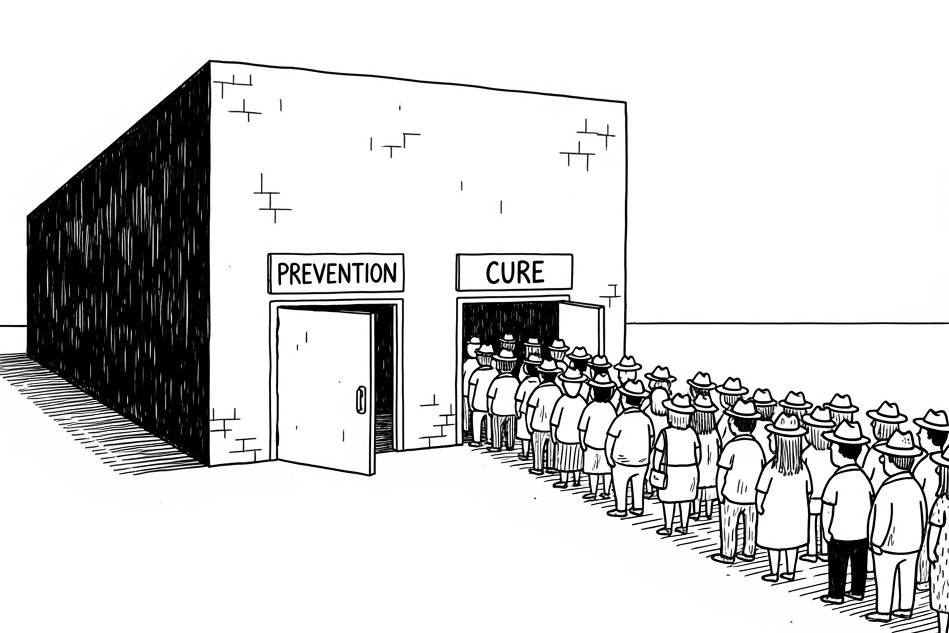
Prevention is logical. But cures feel urgent. And urgency wins.
That’s the uphill battle marketers face when selling anything designed to stop problems before they happen.
No matter how rational the pitch, most people tune it out - until they’re already in pain.
Legendary copywriter Joseph Sugarman once said: “Always sell the cure and avoid selling prevention.”
It’s not just a clever line. It’s a reminder that we’re not selling to logic - we’re selling to emotion, uncertainty, and instinct.
And if you're trying to get ahead of that curve, to help people act before it hurts, you're not just selling a product. You're challenging human nature.
The psychology behind the problem
Joseph Sugarman understood something many marketers learn the hard way: people don’t believe they’ll face the problem until they already have.
“It is human nature to think you're never going to get the disease or affliction that the preventative can prevent.”
This isn’t just a copywriting insight; it’s human psychology. We're wired to downplay future risk and delay uncomfortable decisions, even when the logic is sound. That makes prevention a hard sell. Here's why:
- Present bias makes future rewards feel abstract, while present comfort feels urgent. Acting now to avoid something later just doesn’t feel compelling enough.
- Optimism bias gives people the comforting illusion that bad things happen - just not to them.
- Loss aversion means we’ll work harder to avoid loss than to secure gain, but only once we feel the loss is real.
Sugarman illustrated this with a simple example:
Imagine a traveling salesperson being offered a foot spray to prevent athlete’s foot from hotel showers. It’s easy to ignore. It feels like a maybe.
Now, fast forward a week - they’ve caught it, and it hurts. Suddenly, they’re in a pharmacy searching for the strongest cure they can find.
The logic didn’t change. The stakes did.
And that’s the emotional shift marketers have to account for - the gap between what makes sense and what feels urgent.
The cost of waiting
This pattern plays out across industries. People rarely act to avoid pain - they act to stop it.
In healthcare, a supplement that might reduce long-term cancer risk is a hard sell. But a treatment that promises to fix a problem already in motion? That gets attention - and budget.
Cybersecurity tells the same story. Firewalls and zero-trust systems often get approved only after a breach. Once the data’s been leaked, fear becomes a line item.
Insurance? No one wants to think about it. Until a fire, an accident, or a sudden death makes it impossible to ignore. Then it’s not a financial product - it’s peace of mind.
In SaaS, backups and monitoring tools are easy to delay - until the first outage makes their value impossible to ignore.
In every one of these cases, prevention was cheaper, calmer, and easier - but it didn’t feel urgent until it was too late.
And that’s where the real challenge begins - not for the buyer, but for the marketer.
Because when prevention doesn’t feel urgent, it’s not enough to explain the value. You have to make people care before they feel the cost.
The marketing challenge
Selling prevention means marketing to a problem your customer hasn’t fully felt.
You’re not just offering a solution - you’re challenging their sense that everything’s fine.
No visible threat means no urgency, and logic alone rarely drives action.
Fear can backfire. Pressure feels premature. Even clear benefits often fall flat when there’s no sense of risk.
The real challenge isn’t the product - it’s timing, context, and belief.
You’re asking someone to act early, invest before there’s pain, and trust a risk they can’t yet see.
That takes more than foresight.
It takes a shift - in framing, in perception, and in how value is made real before the problem shows up.
The shift that matters
It starts with how you present the product.
Not as a warning - but as a smart move, a timely edge, or a signal of who your customer wants to be.
Here’s how prevention starts to sell:
- Make it part of a system people already want to join
Prevention feels more valuable when it’s positioned as part of a larger stack, lifestyle, or identity, and when others are already doing it.
Think of it as “digital hygiene,” “personal wellness,” or “founder best practices.” It’s not just a product. It’s the new standard. - Make future risk feel immediate
Share a competitor’s outage. Share a customer story that feels familiar or relatable. Point to a trend that suddenly feels relevant.
The goal is to close the emotional gap between “someday” and “soon.” - Offer an immediate micro-win
If the long-term payoff feels distant, give them a small victory right away.
A budgeting app that “saves you $50 in five minutes” creates momentum. The user sees a result today - and keeps going tomorrow. - Appeal to their protective instincts
People might ignore a risk to themselves - but not to their families, teams, or customers.
“Keep your team from losing a day of work.” “Protect your family’s access to these files.” That kind of framing makes the decision feel bigger than them.
The job isn’t just to warn. It’s to help people see that acting early is not only smart - it’s what thoughtful, responsible, future-minded people are already doing.
The bottom line
Smart. Practical. Easy to ignore.
People don’t act on what they can’t feel - and prevention, by nature, feels distant.
That’s why it needs more than logic. It needs framing.
Sell the future like it’s already knocking.
Make it feel urgent, rewarding, part of something bigger, or simply too smart to ignore.
Because if your product solves tomorrow’s problem, your job is to make it matter today - while your customer still has time to care.