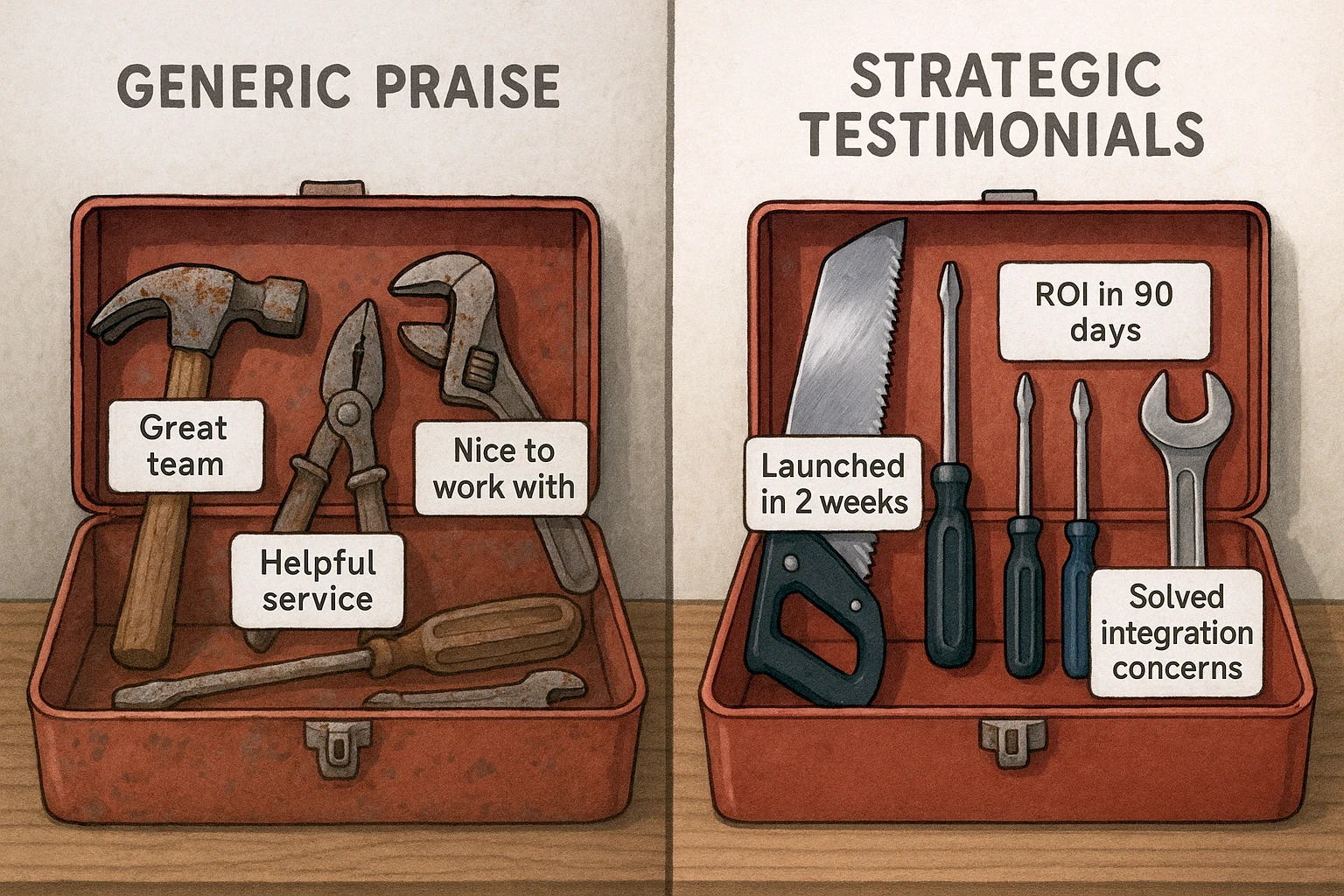
Your Offer Isn’t About You. It’s About Them.
You’re not selling a product or service. You’re selling a better version of your customer’s life.
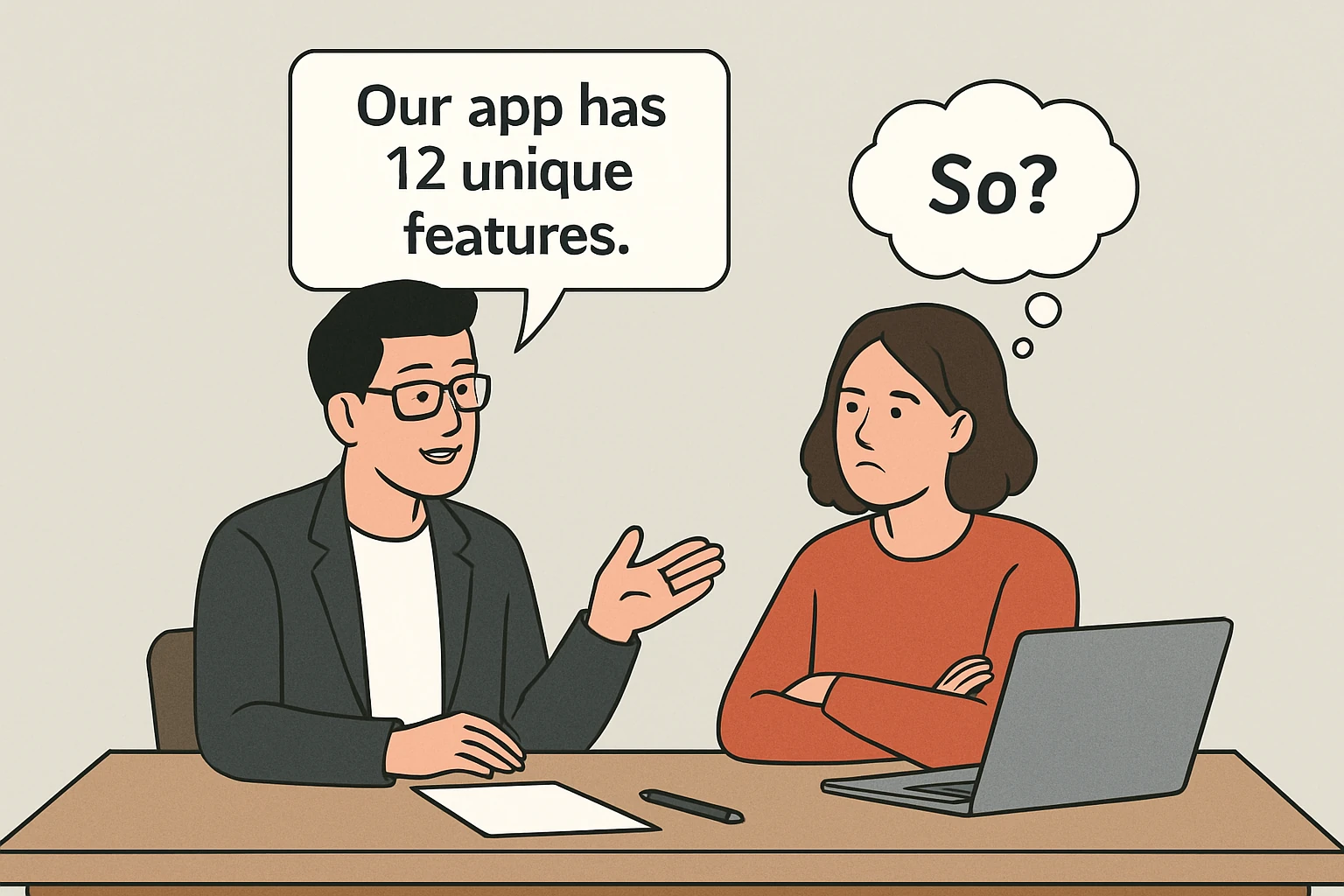
Last week, I found myself trapped on a software demo where the sales rep dedicated the introductory phase to detailing their company history, office locations, and impressive client roster. My coffee grew cold as I waited for him to address the workflow challenges that prompted me to book the call in the first place. By minute ten, I was not-so-subtly checking emails, mentally composing a polite excuse to end the call early, and jotting down notes for follow-ups with competing vendors.
After finally making my escape, I couldn't help but reflect on how many sales opportunities are lost this exact same way. This scenario plays out thousands of times daily across websites, sales calls, and marketing materials. Businesses create an invisible wall between themselves and potential customers by focusing on what matters to them rather than what matters to their audience.
Why your message is getting lost
You've seen it everywhere - businesses proudly proclaiming: "We've been industry experts for a decade. Our award-winning product features 12 capabilities."
Anyone who's sat through these presentations knows what's happening on the other side: potential customers thinking, "So what? How does any of this help ME?"
The painful disconnect is all too familiar. Nielsen Norman Group research validates this experience, showing that investing in usability improvements, which includes clearer communication of benefits, can improve conversion rates by 83%. Yet despite clear evidence, most businesses continue talking about themselves rather than addressing what their customers actually care about.
Three common messaging traps
Scan any industry website and you'll spot these three self-sabotaging patterns that might be lurking in your own materials:
The History Lesson
Common version: "Founded in 2012, our company has grown to become an industry leader..."
What their prospects actually think: "I don't care when you were founded; tell me if you can solve my problem now."
The Feature Dump
Common version: "Our platform offers customizable dashboards..."
What their customers are wondering: "Will this save me time? Make me more money? Or am I wasting my breath here?"
The Credential Showcase
Common version: "Our team has over 50 years of combined experience..."
What their potential clients are silently asking: "But will you understand MY specific situation or just apply your one-size-fits-all solution?"
Every day, these approaches drive perfect prospects away from businesses just like yours. The frustrating part? The fix is right there for anyone willing to see it.
The magic pivot: learning from success stories
Look at Apple's transformative approach to tech marketing across decades. While their competitors focused on technical specifications, Apple consistently spoke to what customers would experience.
In 1984, when IBM and others were deep in the weeds about processing power and memory, Apple introduced the Macintosh as "The Computer for the Rest of Us" – immediately positioning their product not by what it contained, but by who could benefit from it.
Fast forward to 2001, when MP3 player manufacturers were competing on megabytes and battery specifications. Apple simply promised "1,000 songs in your pocket" – translating technical capacity into an immediately understandable benefit that anyone could visualize.
Even recently, when competitors were comparing processor speeds and RAM in tablets, Apple's iPad Pro campaign declared "Your next computer is not a computer" – shifting the conversation from what the device is to what it enables for the user.
This focus on user outcomes rather than product specifications has helped many companies build passionate customer bases - and the strategy works for businesses of any size.
The 5-minute "So what?" test you can use today
When your business is struggling to convert prospects, grab a red pen and follow these exact steps:
- Pull out your key marketing piece - usually whatever's losing you the most money
- Circle every "we," "our," and "us" statement with your red pen
- Beside each, write: "Why would anyone care about this?"
- Then rewrite each statement from the customer's perspective
You might squirm in your chair seeing all that red ink. But then the lightbulb moment will happen - you'll finally see your messaging through your customers' eyes.
When features matter: balancing specs with outcomes
"But wait," you might be thinking, "what about when I'm selling to engineers, IT professionals, or technical buyers who genuinely care about RAM size and processor speeds?"
You're right - there are absolutely audiences for whom specifications matter deeply. The mistake is assuming that even these technical buyers only care about specs for specs' sake. They care because those specifications enable specific outcomes in their work.
The winning approach combines both, leading with the outcome while supporting it with the relevant specifications:
Standard technical approach: "Our CDN features 250+ global edge locations, automatic image optimization, and 100 Tbps network capacity with instant purge capabilities."
Balanced approach: "Your visitors will experience lightning-fast page loads worldwide thanks to our CDN's 250+ global edge locations and automatic image optimization. When you need to update content, instant purge capabilities mean your customers always see the latest version, not cached errors."
Standard technical approach: "Our enterprise solution provides 99.99% uptime with redundant cloud infrastructure."
Balanced approach: "Your customers never experience service interruptions, thanks to our 99.99% uptime guarantee backed by redundant cloud infrastructure - meaning your team can focus on growth rather than fighting fires."
Standard technical approach: "Our development platform supports multiple frameworks including React, Angular, and Vue."
Balanced approach: "You'll ship products faster by letting your developers work in their preferred frameworks - whether React, Angular, or Vue - eliminating the learning curve that slows down implementation."
Even the most technically sophisticated buyers are still human beings making decisions based on how a product or service will improve their work life. They simply need that bridge between the technical specifications and the outcomes those specifications enable.
The moment of truth: evaluate your messaging
Pull out your marketing materials tonight. Pour yourself something strong if needed, because this might hurt. Count how many times you talk about yourself versus how many times you address what your customers want.
That gap right there? That's where your conversions are getting lost.
Stop talking about yourself. Start talking about them. That small shift changes everything.
Because people don't buy features - they buy outcomes. And your business won't be the exception to this rule.