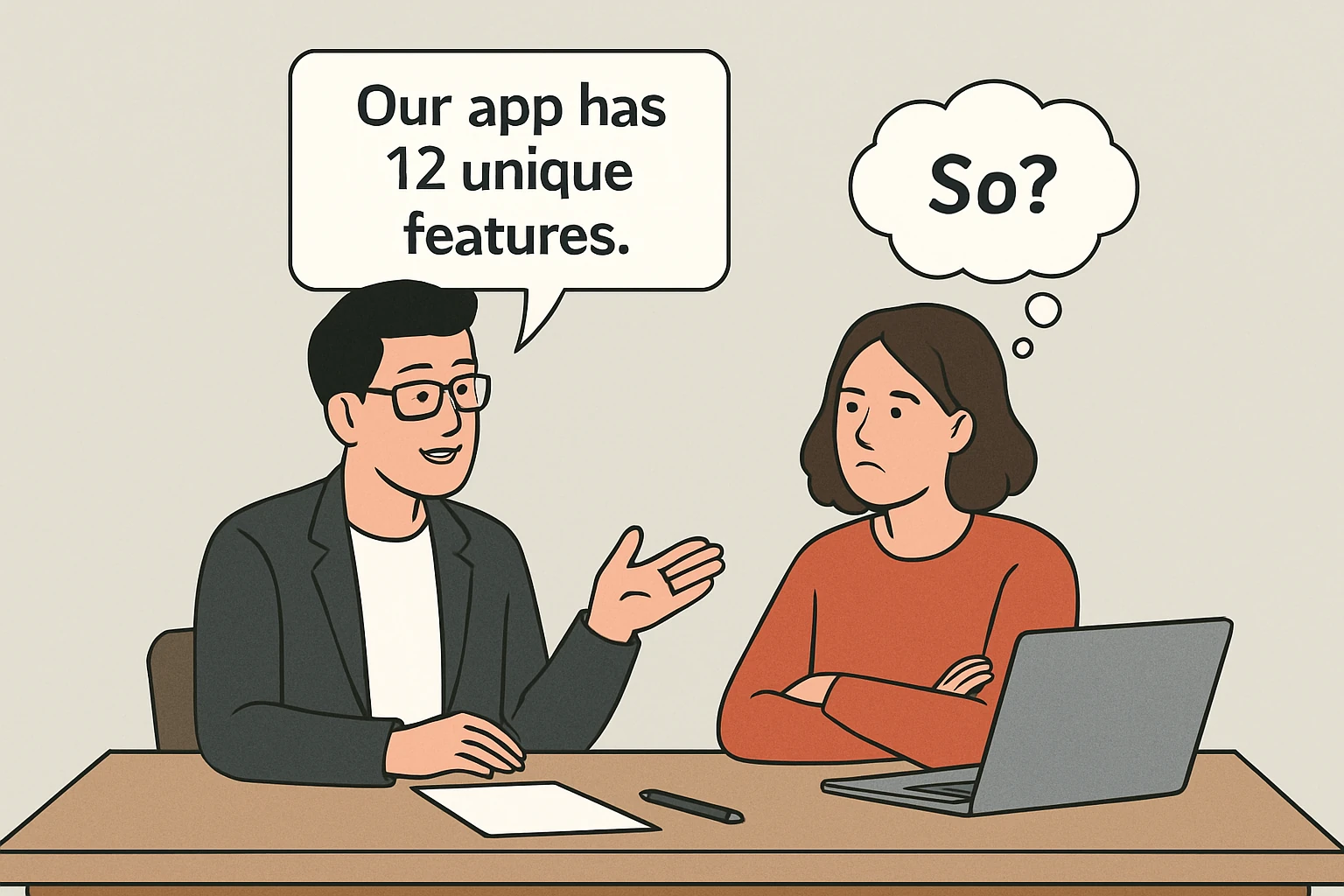
Why Your Customer Testimonials Aren’t Working
The difference between a nice quote and a sales asset is one clear shift.
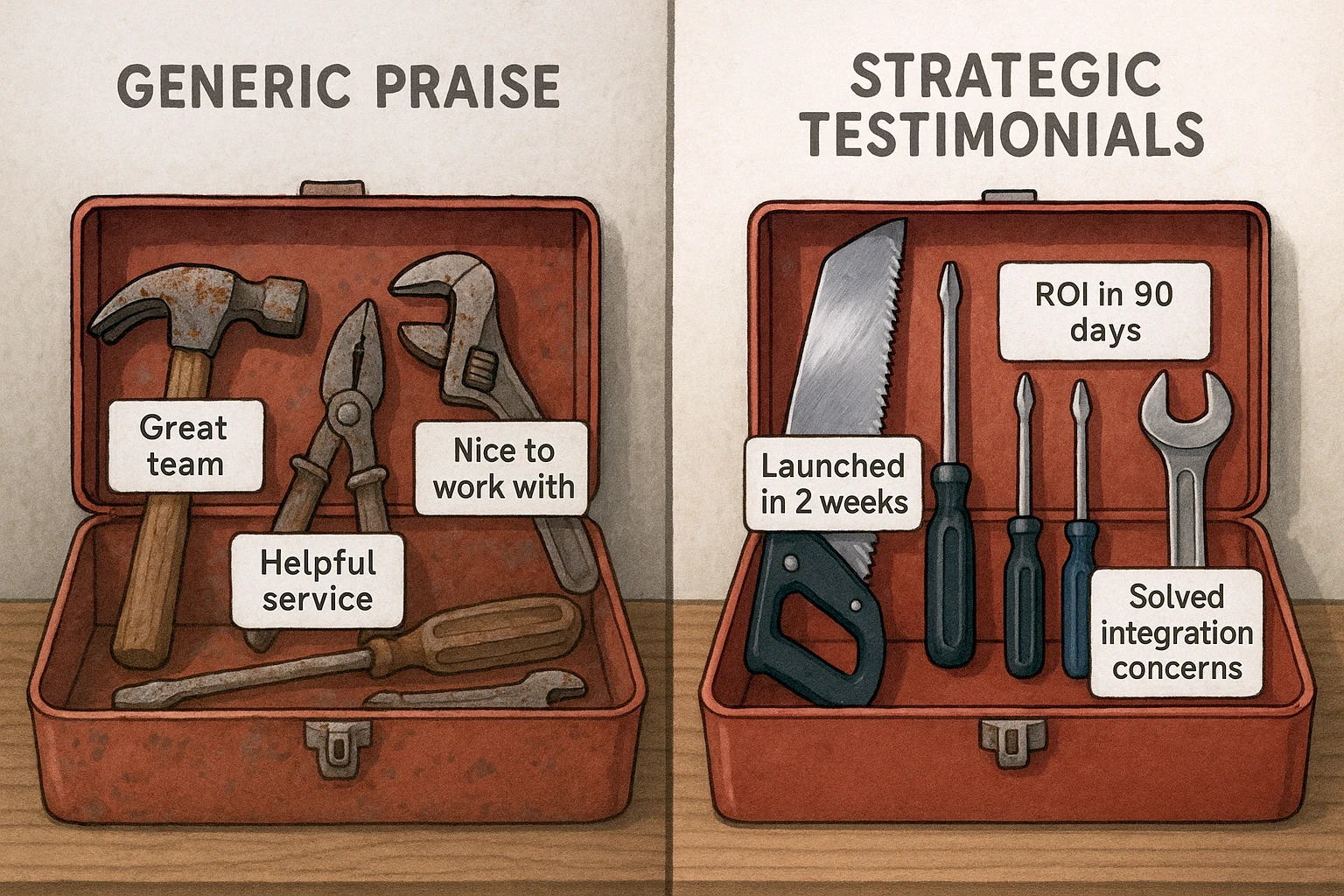
Most customer testimonials are a warm pat on the back.
You’ve probably got a few quotes that sound like this:
“They’re a great partner.”
“The team was easy to work with.”
Nice to hear. But they don’t tackle what really matters - the hesitation your buyer feels right before signing.
Now compare that to:
“We weren’t sure if the platform would integrate with our tech stack, but within two weeks, it was live and generating results.”
That second story doesn’t just say we’re good. It proves you’ve solved the exact concern your next buyer is struggling with right now.
Most testimonials make you look good.
But the best ones do more - they help you close.
One builds goodwill. The other removes friction and drives revenue.
In this post, we’ll walk through a practical framework for turning testimonials into strategic assets - the kind that anticipate objections, shift perception, and help close deals faster.
Why testimonials should be built backward
The problem with most testimonials? They’re reactive, not strategic.
They usually start with a happy customer and a broad prompt: “Can you share a few kind words about your experience?” The result? A glowing quote. It’s well-meaning. It gets published. It makes everyone feel good.
But praise alone doesn’t close deals. Targeted proof does.
The best testimonials don’t begin with the customer.
They begin with the objection that’s holding your next buyer back.
Instead of asking, “Who’s thrilled with us right now?”
Ask: “What’s the specific fear that stalls our deals - and which customer had that exact concern before we proved them wrong?”
When you work backward from friction, you stop collecting generic praise and start building confidence.
You’re not just telling a story. You’re removing doubt.
Strategic teams don’t just celebrate success. They source stories that speak directly to the buyer’s moment of hesitation and turn it into a reason to move forward.
How strategic teams use testimonials
Once you’ve made the shift - from collecting praise to engineering confidence - it changes how you think about customer stories altogether.
It’s not just a messaging adjustment.
It reshapes how teams prioritize, source, and apply testimonials across the go-to-market motion.
Here’s what that shift tends to look like in practice:
- Old approach: Collect testimonials, then figure out where to use them.
- New approach: Start with the objection, then source the story that neutralizes it.
- Old approach: Let the customer decide what to highlight.
- New approach: Guide the narrative to surface the shift that matters most to future buyers.
- Old approach: Share quotes because they sound good.
- New approach: Deploy stories because they remove friction.
This isn’t about surface-level polish.
It’s about alignment - making sure every story you share serves a purpose deeper than praise.
When marketing, sales, and customer teams share this mindset, testimonials stop being a box to check… and start becoming a tool to move deals forward.
A simple system for building sales-ready testimonials
So, what does it look like to actually build testimonials that remove doubt?
Here’s a simple structure to guide your team’s thinking.
It’s not about writing better quotes - it’s about choosing sharper stories.
1. Start with the Friction
What’s the core hesitation that slows your deals?
Is it pricing? Integration risk? Unclear ROI?
You can’t resolve friction if you haven’t defined it.
2. Find the Match
Who had that same concern, and now has a clear result on the other side?
You’re not looking for praise. You’re looking for reversal: hesitation, followed by success.
3. Frame the Shift
Structure the story to mirror the buyer’s journey:
“We were concerned about [objection], but [company] delivered [outcome].”
This turns doubt into trust - and makes the story useful in a sales moment.
That’s it.
Not more stories - just the right ones, built with purpose.
Make it a team priority, not a content task
Turning testimonials into sales assets isn’t just a marketing initiative.
It’s a go-to-market move - and it works best when everyone’s in on it.
- Sales knows where deals stall.
- Customer success knows who has overcome those hurdles.
- Marketing knows how to shape a story that lands.
That overlap isn’t accidental. It’s an opportunity.
Here’s a simple question to guide the collaboration:
“What’s the #1 reason our deals stall in the final stage - and whose customer story can we use to neutralize that fear?”
Use it in your next pipeline review, QBR, or team sync.
It’s a fast way to turn scattered insight into a shared advantage.
A smarter way to earn trust
Every buyer hesitates before they commit.
And most companies already have stories that could ease that hesitation - they’re just not using them with intent.
This isn’t about more quotes or louder praise.
It’s about clarity: knowing what your buyers need to hear, and finding the proof that makes it real.
If your testimonials aren’t helping move decisions forward, don’t start over.
Start smaller. Sharper.
Look for the one story that answers the question your buyer won’t ask out loud, and lead with that.