The Hidden Psychology of Collecting: How Brands Hook You
How scarcity, surprise, and emotion turn objects into must-have obsessions.
On a rainy afternoon, someone is filming their fifth unboxing video of the week. The desk is spotless, the lighting just right, and every detail pulls your focus inward. A mystery box sits waiting, part of a collectible series where you never know what you’ll get. The box makes a satisfying crackle. Will it be the rare one this time? The comments are already rolling in - guesses, cheers, envy.
This isn’t just entertainment. It’s a ritual built on psychology.
Once a niche interest, collecting has found its way into pop culture and daily routines. From Labubu dolls to limited-edition tumblers, we chase the next item not just for what it is, but for how it makes us feel: complete, connected, in control. And marketers have turned that impulse into a science.
In this post, we’ll unpack why collecting feels so good, how brands engineer that satisfaction, and what your growing shelf of “just one more” might be trying to tell you.
Why humans love to collect
Let’s be honest: there’s something weirdly satisfying about lining things up just right. Whether it’s Pokémon cards, enamel pins, or limited-edition sneakers, the drive to collect is more than a casual interest - it’s a deep-seated psychological itch.
- Fear of Missing Out (FOMO)
One of the biggest motivators behind collecting is the fear of missing out. That limited-edition drop? The “only 500 made” label? It sparks a small panic - if you don’t get it now, you may never get the chance again. FOMO isn’t just a cultural buzzword; it’s a behavioral trigger. In fact, 60% of online shoppers make impulse purchases during flash sales, driven by the anxiety of being left out. That urgency makes the item feel more valuable - even before we know if we actually like it. - Completionism and Closure
Then there’s the powerful lure of finishing a set. Psychologists call this the completionist mentality - the internal drive to fill in the blanks and wrap things up with a tidy bow. It’s why some people spend years hunting down that one missing Beanie Baby or chase the last two Funko Pops from a series. In a world that’s often unpredictable, completing a collection offers a rare sense of control and satisfaction. - The Thrill of the Unknown
And then there’s surprise. Humans are wired to respond to variable rewards - unexpected outcomes that keep us coming back for more. This is the same principle as B.F. Skinner discovered with his famous rat experiments: he placed rats in a box with a lever that, when pressed, occasionally dispensed food. When the food pellet arrived unpredictably, the rats pressed the lever far more frequently. In other words, this unpredictable reward pattern leads to a sharp increase in engagement. It’s the exact mechanism behind mystery boxes, blind bags, and digital loot crates - a little randomness keeps things exciting.
In short, collecting taps into three ancient instincts at once: avoid missing out, complete the puzzle, chase the thrill. And when brands mix all three together? That’s when it gets addictive.
Collecting in the wild: modern examples
Take Labubu.
What began in 2015 as a quirky art toy by Hong Kong artist Kasing Lung found mass appeal when Pop Mart launched blind-box releases and limited drops in 2019. But it exploded in 2023 when celebrities - Rihanna, BLACKPINK’s Lisa, Dua Lipa, and Kim Kardashian - began sharing their collections. The combination of scarcity, celebrity spotlight, and surprise created a frenzy. Fans queued globally, even hiring others to stand in line, and secondary prices surged into the hundreds - or even thousands - of dollars. It was a textbook case of variable reward meets social proof.
Or consider Funko Pops.
These affordable figures - usually priced between $10–15 - have struck a perfect pop-culture chord. With official licenses from Marvel to Stranger Things to The Flash, Funko caters to nearly every fandom out there. The secret sauce? Chase variants - rare versions, often about 1-in-6 odds, featuring special finishes, alternate poses, or retailer exclusivity. They land in blind boxes or randomized shipments, fueling that sense of surprise and scarcity. As collectors share their "chase" hauls online, the social buzz intensifies and keeps demand rolling.
Then there are Pokémon cards.
This phenomenon combines nostalgia, rarity, and financial speculation. The holy grail - a PSA-graded 10 Pikachu Illustrator - sold in a private transaction for $5.275 million in July 2021, setting a record for collectible cards. Originally awarded through a late-1990s art contest and with only around 41 prints, it’s the rarest Pokémon card of all. Such extreme value is driven by both emotional nostalgia and investor speculation, with grading systems and global resale platforms treating cards like securities.
Each of these stories shares the same psychological recipe: mystery + scarcity + payoff - whether that's creative validation, social clout, or financial gain. Items become more than merchandise; they become triggers that keep us coming back for just one more thrill.
How to design a collectible people can’t resist
There’s no official rulebook for collectible marketing - but there might as well be. Over time, brands across industries have discovered a set of tactics that work almost too well. Here's how they do it.
- Limit the supply
Keep the release small. Make it seasonal, regional, or one-time-only. Scarcity taps into our instinct to act quickly - not just because we want the item, but because we’re afraid someone else might get it first. When availability feels uncertain, desire goes up. - Add an element of surprise
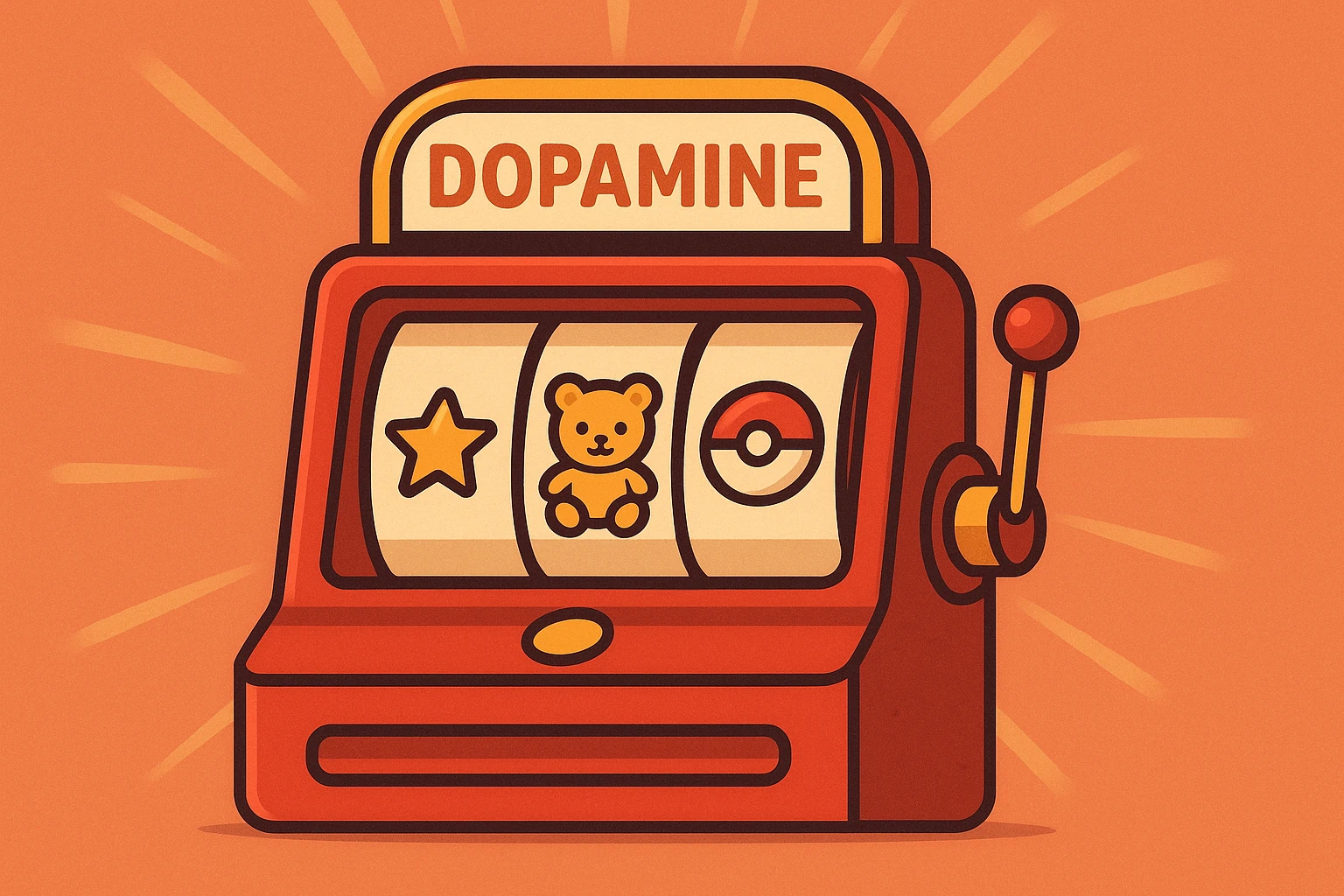
Whether it’s a blind box, a randomized pull, or a “chase” variant, unpredictability keeps people engaged. Psychologists call it variable reinforcement, and it’s the same mechanism behind slot machines. When you can’t predict what you’ll get, each purchase feels like a gamble - and that’s part of the thrill. - Make It Worth Showing Off
Collecting used to be a private thing. Now it’s content. Unboxings, shelf tours, TikToks of rare pulls - the visual side of collecting fuels its popularity. So brands design with the camera in mind: bold packaging, clean lines, bright colors. The more shareable it is, the faster it spreads. - Tell a Story
Emotional resonance is the long game. Give your product a backstory, a character, a connection to something nostalgic or meaningful. LEGO does this. Disney does this. Even limited-edition sneakers come with origin stories. People don’t just collect objects - they collect the feelings attached to them.
Put all of this together, and you get more than just a product launch. You get anticipation, hype, emotional investment - and a very long line of people saying “just one more.” It’s not manipulation. Or is it?
The double-edged sword
Collecting can be joyful, even thrilling - but it’s not always harmless. For some, what starts as a fun hobby quietly grows into clutter, overspending, or the frustration of chasing a set that never quite ends.
The low price points make it easy to justify one more purchase. But those blind boxes, limited drops, and must-have variants can add up - financially and emotionally. The thrill of the hunt can slowly shift into a sense of pressure or even obligation.
Then there’s the letdown: when the chase is over, and you’re left wondering if it was about the item… or just the excitement of wanting it.
None of this ruins collecting. For many, it’s still about joy, creativity, and connection. But it helps to pause now and then - and ask if you’re still collecting for fun, or just collecting out of habit.
So, what’s it all for?
At first glance, a collection might just look like stuff - neatly lined shelves, color-coded boxes, characters frozen mid-pose. But look closer, and it starts to say something more. About what we value. What we crave. What we’re trying to hold onto.
Maybe it’s nostalgia for a simpler time. Maybe it’s the thrill of the chase, the joy of finding something rare, or the comfort of completing a set. Maybe it’s all of those things at once.
Collecting is personal, emotional, and - as we’ve seen - deeply psychological. It’s shaped by memory, identity, and sometimes, marketing strategy so precise it borders on art.
So next time you’re holding that limited-edition plushie, ask yourself: Is it just a toy… or a perfectly tuned psychological trigger?
Either way, if it makes you smile - even for a second - that might be reason enough to keep it on the shelf.